
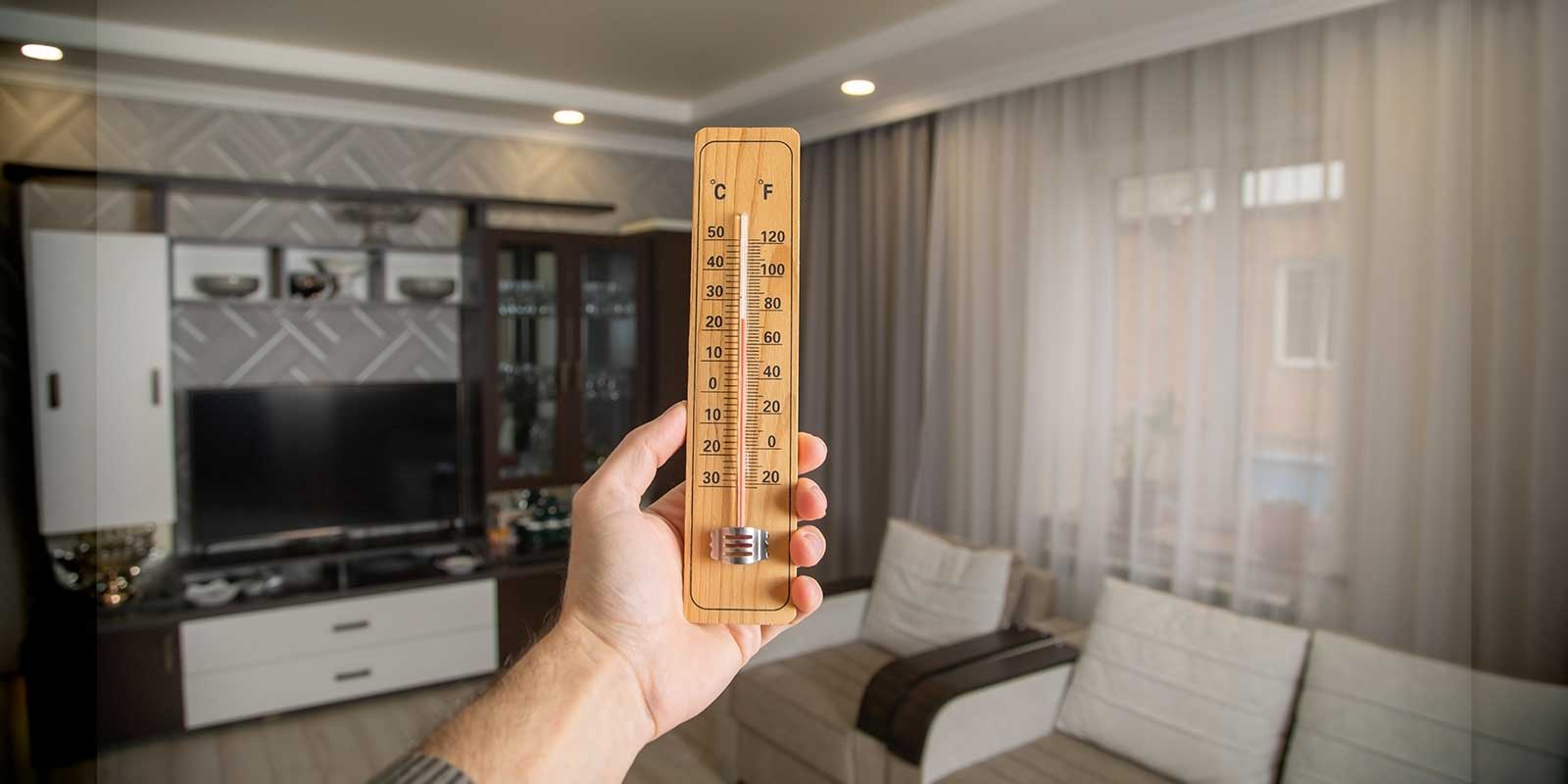
Uneven Temperatures in Your Home? How to Improve Airflow Room by Room
Uneven temperatures in your home can make comfort feel like a guessing game. One bedroom feels too warm, the living room feels chilly, and the upstairs never seems to match the thermostat. For homeowners in the Dallas-Fort Worth area, this problem can become especially frustrating during long, hot Texas summers when your air conditioner is already working hard.
The good news is that uneven room temperatures do not always require a brand-new HVAC system. Often, the issue stems from minor airflow imbalances that can be addressed right at the source.
This guide explains what you can safely check around your house, how your system’s hidden components control airflow, and how a professional can test and precisely adjust airflow when DIY steps are not enough.
DIY Checks for Uneven Temperatures
Some airflow problems can be improved with simple homeowner maintenance. While these steps will not replace professional air balancing, they can help you rule out obvious mechanical restrictions.
1. Inspect Your Supply Registers
Walk through your home and check each supply register; the visible room vent cover where heated or cooled air blows into the room. Most supply registers have small, adjustable louvers (slats) that let you direct airflow.
Make sure these vents are fully open and completely clear of any obstacles, such as furniture, heavy curtains, rugs, or toys. A blocked register can easily starve a room of conditioned air, making it feel uncomfortable even when the rest of the house is perfectly fine.
2. Avoid Completely Closing Vents in Unused Rooms
Many homeowners try to fix uneven temperatures by completely shutting off supply registers in empty guest rooms or storage areas. While small adjustments to guide the air elsewhere are fine, completely sealing off several vents is highly discouraged.
Your HVAC system is designed to move a specific volume of air. When too many vents are closed, air pressure builds up inside the ductwork. This excess pressure forces conditioned air out of minor duct leaks, reduces overall system efficiency, strains the blower motor, and can worsen temperature imbalances in other areas of the house.
3. Check Return Vents for Blockages
Airflow is a two-way street. For every cubic foot of cold air pushed into a room, an equal amount needs to be pulled back out. This is handled by your return vents (or return grilles)—the larger, wall- or ceiling-mounted vents that pull air from your rooms back into the HVAC system for re-cooling or re-heating.
Because return vents suck air in rather than blowing it out, they are easy to accidentally block with large furniture, such as couches or bookcases. Make sure there is clear space around every return grille so your system can breathe freely.
4. Replace a Dirty Air Filter
A clogged, dust-heavy air filter acts like a wall inside your ductwork, restricting the volume of air your system can circulate. If your filter has passed its prime, swap it out for a clean one and see if your weaker vents start blowing more effectively.
The Secret to True Balance: Understanding Dampers
f your vents are open and clean, but you still have a hot upstairs or a freezing bedroom, the issue lies deeper in the system. This is where dampers come into play.
A damper is a movable metal plate inside your ductwork that acts as an air valve. While you use supply registers to make minor cosmetic tweaks in a single room, technicians use dampers to control the main volume of air as it splits into different branches of your home.
Dampers are typically located in the attic, crawl space, or near the main air handler unit. If your system has them, you will see small metal handles on the outside of the duct branches that let you adjust the angle of the internal plate.
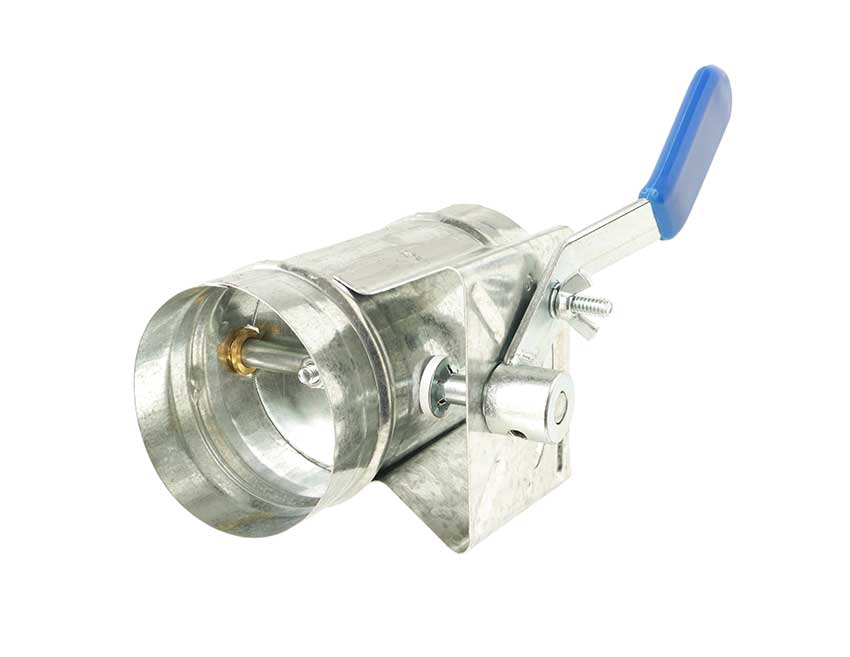
A manual volume damper is used inside ductwork branches to regulate airflow.
What If Your System Is Missing Dampers?
Many North Texas homes are built without balancing dampers installed in the duct branches. Without them, balancing your airflow by simply adjusting room registers is incredibly difficult.
Fortunately, manual balancing dampers can often be added to existing systems:
How Professionals Test and Adjust Airflow
When manual trial and error doesn’t solve the problem, an HVAC professional uses scientific measurements to pinpoint exactly why a room is uncomfortable.
Precise Measurement with Flow Hoods
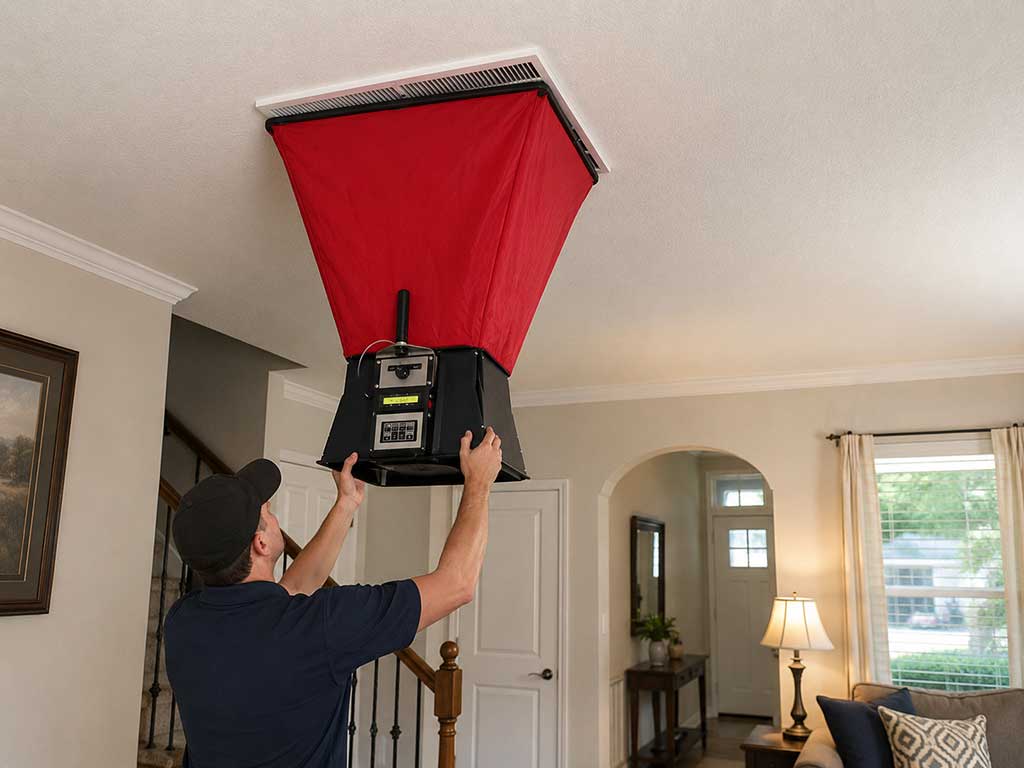
Technicians don’t guess how much air is coming out of a vent by holding their hand over it. Instead, they use a specialized tool called an airflow testing hood (or capture hood).
The flow hood is placed flat against a supply or return vent to collect and measure every bit of air moving through it. The tool displays a reading in CFM (Cubic Feet per Minute), which measures the literal volume of air entering the room. By comparing the actual CFM readings to the original design specifications for your home, the technician can see which rooms are starved for air and which are receiving too much.
The Balancing Process
Once the diagnostic data is collected via the flow hood, the technician systematically adjusts the manual duct dampers to redistribute the air.
They will slightly close the dampers, leading to rooms that stay naturally cooler (or receive too much air), which in turn forces more air volume out to the problem areas—like a hot second story or a west-facing bedroom. After making these adjustments, they retest with the flow hood to confirm that the entire house has achieved a balanced state.
When Airflow Adjustments Reveal Bigger Issues
Sometimes, a professional airflow test reveals that dampers alone cannot fix the problem. If a room has been added to the home during a remodel without expanding the duct network, or if the original configuration was flawed, a physical layout change may be required.
This is where the original ductwork design plays a massive role. Champion Mechanical brings more than 25 years of local DFW experience to advanced ductwork design, allowing us to evaluate structural issues, re-size restrictive trunks, or install dedicated return runs when adjustments alone hit a wall.
Ready for True Home Comfort? Contact DFW’s Airflow Experts to Fix Uneven Temperatures in Your Home
Don’t spend another brutal Texas summer dealing with uneven temperatures in your home. Built on transparency and quality workmanship since 1998, Champion Mechanical has earned a proud reputation across the Dallas-Fort Worth area, backed by an A+ rating from the Better Business Bureau (BBB).
Whether your system simply needs a precise Air Flow Balance or custom layout corrections, our team has the specialized diagnostic tools to fix the root cause of your hot spots.
Contact us today to schedule your professional airflow evaluation and bring consistent comfort back to every room in your house!